


Visualizing Anxiety: Designing Impactful Mental Health Stories with AniFuzion
Learn how to create impactful mental health stories and visualize anxiety using AniFuzion's easy-to-use 2D and 3D animation tools for educators and therapists.
Communicating the complexities of mental health can often feel like trying to describe a color to someone who has never seen it. Words sometimes fall short, but visuals—specifically dynamic, moving visuals—can bridge that gap with empathy and clarity. Whether you are an educator, a therapist, or a content creator, the ability to create stunning 2D and 3D animations allows you to externalize internal struggles, making them easier to understand and discuss. With Visual Paradigm’s online animation maker, also known as AniFuzion, you can craft these sensitive narratives without the stress of a steep learning curve.
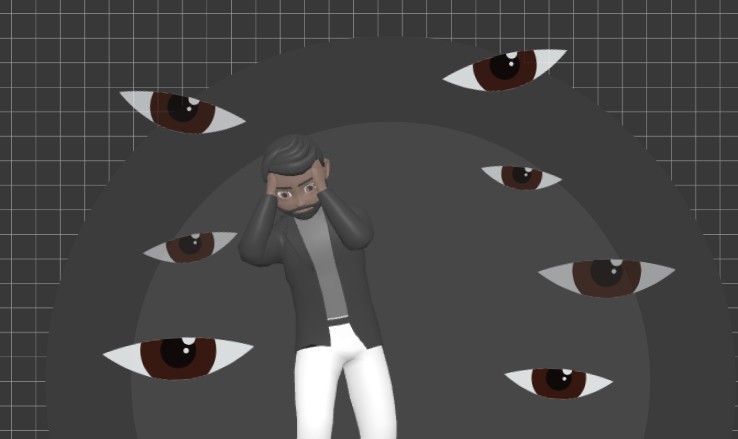
Consider the powerful scene captured below. It depicts a 3D character in a state of visible distress, clutching his head while surrounded by a menacing array of floating eyes. This visual metaphor perfectly encapsulates the feeling of social anxiety—the sensation of being watched, judged, and overwhelmed by perceived scrutiny. By using an easy-to-use animation tool, creators can build such poignant scenes to foster empathy and awareness, turning abstract fears into tangible stories.
Quick Summary: Key Takeaways
- Visualizing the Invisible: Learn how to use visual metaphors (like floating eyes) to represent internal mental health struggles.
- Accessible Storytelling: Discover how AniFuzion’s drag-and-drop interface removes technical barriers for beginners.
- Emotional Resonance: Understand the role of AI Text-to-Speech and automatic lipsync in adding depth to your narrative.
- Efficiency: See how pre-built assets and templates save time, allowing you to focus on the message rather than the mechanics.
Deconstructing the Scene: The Power of Visual Metaphors
The image above is a prime example of how AniFuzion facilitates deep storytelling through visual metaphors. In the realm of mental health awareness, showing is often more powerful than telling. Here, the “monster” isn’t a dragon or a goblin; it is the gaze of others, represented by the disembodied eyes circling the protagonist. This setup immediately communicates the claustrophobia of anxiety.
Creating this requires a tool that offers flexibility. With the extensive 3D character library available in Visual Paradigm’s software, you aren’t limited to generic stick figures. You can choose realistic characters and customize them—changing their clothing, expressions, and even their body language to reflect vulnerability. The dark, grid-like background serves as a void, isolating the character and focusing the viewer’s attention entirely on the emotional weight of the moment. This is professional-grade storytelling made accessible to everyone.
How to Build Your Own Awareness Animation
If the idea of creating an animation from scratch makes you feel a bit anxious yourself, take a deep breath. AniFuzion is designed to be a soothing, patient partner in your creative process. Let’s walk through how you might construct a scene like the one above using this AI-powered animation software.
1. Setting the Stage with Drag-and-Drop Ease
Every story needs a setting. In our example, the creator opted for a minimalist, dark aesthetic to emphasize the mood. In AniFuzion, you simply navigate to the background library and drag your choice onto the canvas. If you want to create a sense of unease, you might choose darker tones or abstract patterns. The drag-and-drop interface ensures that placing these elements is as simple as arranging furniture in a room—no coding or complex rendering required.
2. Character Customization and Rigging
To make your audience care, they need to connect with the character.
- Select a Model: distinct from the thousands of options in the library.
- Customize Appearance: Use the properties menu to adjust textures and colors. Perhaps a grey outfit to symbolize the character’s internal gloom?
- Apply Actions: This is where the magic happens. Instead of manually drawing every frame, you use the Pre-Built Actions and Motion Library. Search for “headache,” “fear,” or “cower,” and watch your character instantly adopt the pose shown in the image.
3. Adding Symbolic Elements
The floating eyes are “props” that carry the narrative weight. In the tool, you can search for shapes or objects (like an “eye”) and place them around your character. By using Shape Effects and Animation Presets, you can make these eyes float, blink, or zoom in, simulating the overwhelming nature of a panic attack. You can layer these animations on the timeline to create a chaotic rhythm that mirrors the character’s heartbeat.
Enhancing Empathy with Audio and AI
While the visual of the distressed character is strong, sound creates the atmosphere. A silent video might not capture the full intensity of the experience. This is where the integrated AI enhancements shine. You don’t need to hire a voice actor to narrate the character’s internal monologue.
Using the AI Text-to-Speech (TTS) feature, you can type out a script—perhaps a stream of consciousness about feeling judged—and generate a voiceover. You can select a tone that sounds “whispering” or “fearful” to match the visual. Furthermore, the automatic lipsync feature ensures that if your character speaks, their mouth moves in perfect harmony with the words. This level of synchronization adds a layer of realism that can make educational content profoundly moving and effective.
Why Animation is Ideal for Sensitive Topics
You might wonder, why not just film a real person? Live-action video can sometimes feel too raw or intrusive for topics like mental health. Animation provides a “safe distance.” It allows viewers to project themselves onto the character without the bias of recognizing a specific actor. It universalizes the experience.
Moreover, animation allows you to depict the abstract. You cannot film “anxiety” with a camera, but you can animate it as a shadow, a cloud, or, as seen here, a circle of watching eyes. Visual Paradigm’s best animation software empowers you to enhance creativity without barriers, giving form to feelings that are otherwise invisible. This capability is invaluable for educators creating safe spaces for discussion or HR professionals designing inclusive training modules.
Conclusion: Your Story Matters
Creating content about mental health is a brave and necessary endeavor. It requires sensitivity, but it shouldn’t require a degree in computer graphics. Visual Paradigm Animation Maker (AniFuzion) democratizes this process, offering a cost-effective solution that transforms beginners into storytellers. By combining pre-built assets, intuitive controls, and powerful AI, you can produce videos that not only look professional but also heal, educate, and connect.
So, don’t let the technical side intimidate you. The canvas is ready, the tools are simple, and your story is waiting to be told.
Ready to bring your ideas to life?
Subscribe to Visual Paradigm Online today and start creating animations that make a difference: https://online.visual-paradigm.com/subscribe.jsp
Related Resources
- Comprehensive Tutorial on Anifuzion: The Ultimate Animation Maker: This page provides a detailed technical guide on using Anifuzion to create high-quality animations with minimal effort.
- Solutions for Content Creators | Anifuzion: Anifuzion enables content creators to produce professional-grade animated visuals without requiring advanced animation skills.
- Comprehensive Guide to Creating Animated Videos with Anifuzion: This guide offers step-by-step technical instructions for generating animated videos using Anifuzion’s intuitive interface.
- A Beginner’s Guide to Creating Stunning 3D Animations with Anifuzion: Designed for newcomers, this guide explains how to produce visually impressive 3D animations using Anifuzion’s automated tools.
- How Anifuzion Empowers Non-Animators to Create Stunning Visuals: This article explains how Anifuzion leverages AI-driven automation to enable non-experts to produce high-quality visual content.
- Create Stunning Animations with Over 2000 Character Actions and …: Creating realistic dialogue has never been easier with AniFuzion’s automatic lipsync animation feature. Powered by AI, this tool syncs your character’s mouth …
- Discover AniFuzion: The Distinctive Animation Maker That Sets You …: What truly sets AniFuzion apart is its blend of versatility and creativity. With a rich library of customizable templates, 3D characters, and dynamic visual …